A commercial roof isn't a simple maintenance line item. It's a tactical defensive barrier protecting your industrial assets from the volatile Mid-Atlantic climate. Most property owners view leaks as an inevitability, but recurring failures often stem from contractors who lack the logistical mastery required for large-scale operations. If your current system is over 15 years old, you're likely facing reduced insurance coverage and escalating energy costs. Selecting the right commercial roofing contractor Philadelphia is a high-stakes decision that requires a focus on technical execution and industrial-strength reliability.
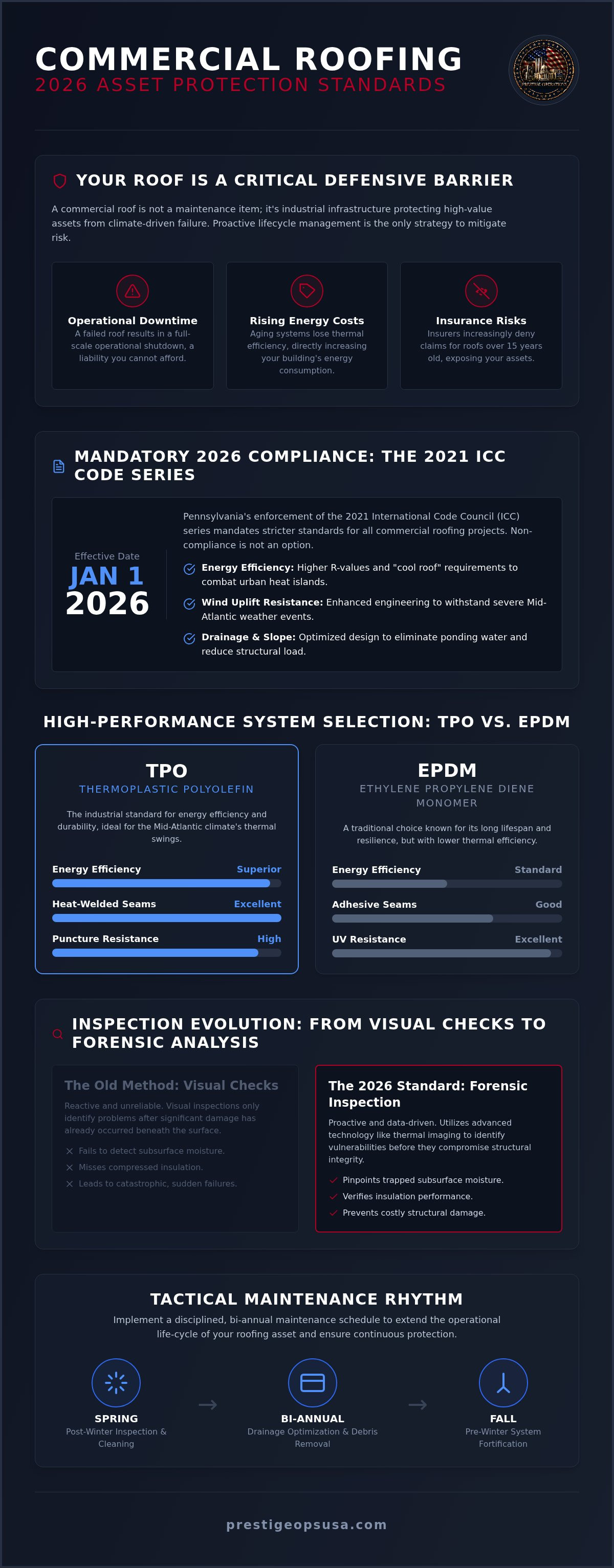
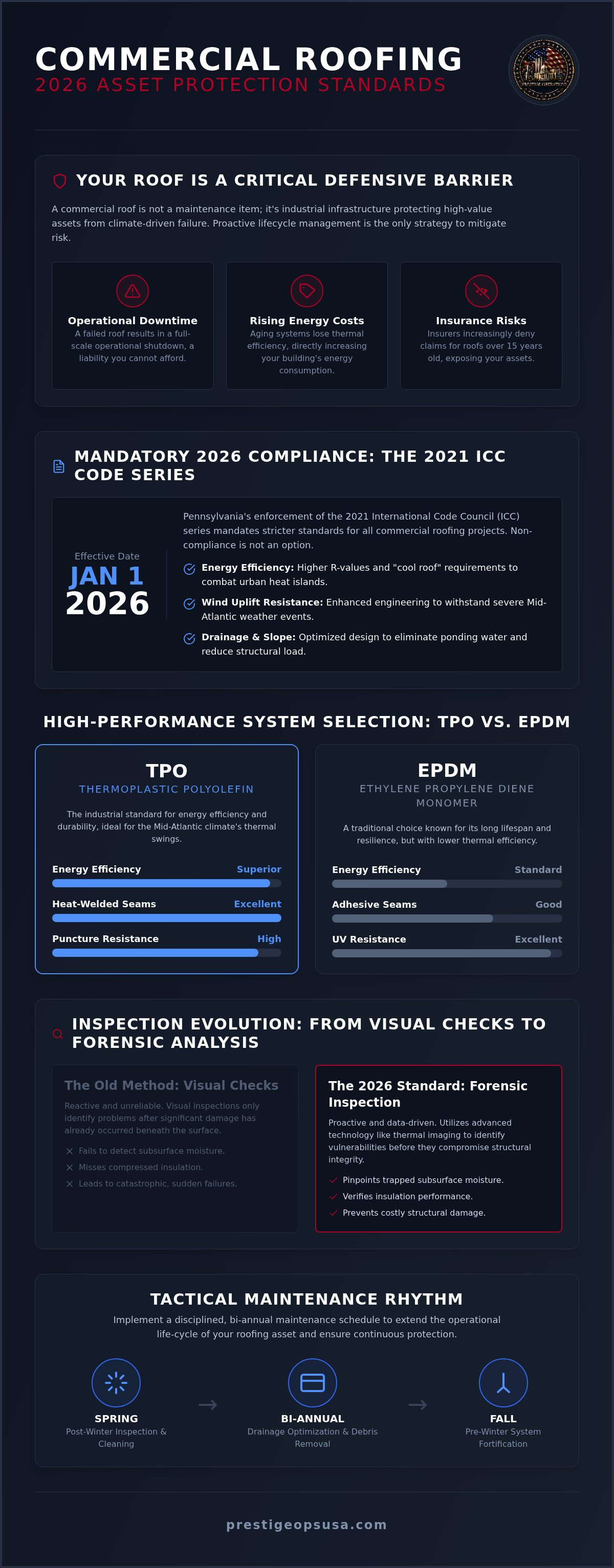
You know that downtime is a liability you can't afford. You need a roofing system that delivers absolute reliability without the constant need for patchwork repairs. This guide establishes the asset protection standards for 2026, providing a technical roadmap for selecting high-performance systems. We'll examine the enforcement of the 2021 ICC code series starting January 1, 2026; evaluate the performance of 60-mil single-ply membranes; and outline the precision management required for complex, high-stakes roof replacements.
Key Takeaways
- Treat your roofing system as critical industrial infrastructure to protect inventory and machinery from climate-driven failures.
- Identify the specific criteria for selecting a commercial roofing contractor Philadelphia that possesses the industrial-scale equipment and technical mastery required for 2026 compliance.
- Evaluate the performance of TPO and EPDM membranes against Southeastern Pennsylvania's extreme temperature swings to ensure long-term thermal efficiency.
- Transition from visual checks to forensic-level inspections using thermal imaging to detect subsurface moisture before it compromises structural integrity.
- Implement a bi-annual maintenance rhythm focused on drainage optimization and debris removal to extend the operational life-cycle of your roofing asset.
Philadelphia Commercial Roofing: The Standard for Asset Protection
Commercial roofing isn't a building accessory. It's a critical component of your industrial infrastructure. For a high-capacity facility, the roof is the first line of defense for inventory, machinery, and personnel. In the Philadelphia metropolitan area, environmental stressors are relentless. Urban heat islands drive roof surface temperatures to extreme levels. Heavy snow loads test structural integrity every winter. A failed roof isn't just a repair bill. It's a full-scale operational shutdown.
Managing these risks requires a shift in perspective. You aren't just looking for a service provider. You need a commercial roofing contractor Philadelphia that treats your facility as a long-term asset. This involves analyzing the full spectrum of commercially available roofing materials to match the specific thermal and structural needs of your site. Urban heat islands in Philly create unique thermal expansion challenges. Roof membranes expand and contract at different rates than the underlying deck. This leads to premature seam failure if the system isn't engineered for durability. It's about tactical defense.
In Philadelphia, insurers are increasingly denying claims for roofs over 15 years old. Proactive lifecycle management is the only way to maintain full coverage. Waiting for a visible leak to occur is a failed strategy. By the time water reaches the warehouse floor, the underlying insulation and structural decking are often already compromised. True asset protection means staying ahead of the degradation curve through precision engineering and professional oversight.
The Role of Industrial-Strength Reliability
Surface-level repairs fail in demanding industrial environments. They ignore the underlying physics of the system. Patching a massive membrane without addressing moisture saturation or insulation compression is a waste of capital. Industrial-strength reliability demands logistical mastery. It means coordinating specialized labor and heavy equipment to execute a project with zero margin for error. We move from reactive maintenance to a strategic defense posture. This ensures your operations continue without interruption, regardless of external conditions.
Philadelphia Building Codes and Compliance Standards
Regulatory compliance is a non-negotiable aspect of asset protection. As of January 1, 2026, Pennsylvania enforces the 2021 ICC code series. This update mandates stricter standards for energy efficiency, fire ratings, and wind uplift resistance. In Philadelphia, the permit process for industrial facilities is technically demanding. Proper documentation for new penetrations, HVAC curbs, or full replacements is mandatory. Philly-specific regulations also focus on drainage. 2026 standards require optimized slope and drainage paths to prevent ponding. A professional contractor handles these logistics with precision. Every installation must meet or exceed these municipal requirements to secure your investment.
High-Performance Roofing Systems for the Mid-Atlantic Climate
Selecting a roofing system for an industrial facility in Southeastern Pennsylvania requires more than a surface-level comparison of materials. The region's climate dictates specific technical requirements. You face a cycle of high-humidity summers and freeze-thaw winter conditions. These fluctuations cause significant thermal movement in large-scale structures. A high-performance system must accommodate this movement while maintaining a watertight seal. Choosing a commercial roofing contractor Philadelphia with deep technical expertise ensures your material selection aligns with these environmental realities.
Durability and puncture resistance are non-negotiable for industrial assets. Whether your facility faces chemical exposure from manufacturing exhaust or heavy foot traffic for HVAC maintenance, the membrane must hold up. Modern standards for 2026 emphasize "cool roofing" technologies to combat urban heat islands. These systems reflect sunlight rather than absorbing it, which directly reduces the thermal load on your building. Adhering to NRCA roofing manuals for installation and material specifications is the only way to guarantee the system performs as engineered under extreme stress.
TPO vs. EPDM: Tactical Selection Criteria
TPO (Thermoplastic Polyolefin) has become the industrial standard for energy efficiency. Its heat-reflective properties are ideal for large warehouses in Philadelphia where cooling costs are a primary concern. Most installations now utilize 60-mil membranes to provide enhanced puncture resistance and weld strength. In contrast, EPDM (Ethylene Propylene Diene Monomer) remains a powerhouse for durability in regions like Allentown and Reading. Its synthetic rubber composition excels in freeze-thaw cycles. EPDM remains flexible in sub-zero temperatures, preventing the cracking that can plague lesser materials. A 20-year lifecycle analysis often shows that while TPO offers superior immediate energy savings, EPDM provides unmatched long-term resilience against thermal shock.
Metal Roofing for Industrial Longevity
For manufacturing plants requiring maximum service life, structural metal roofing is a decisive choice. These systems offer superior wind uplift resistance and can withstand severe weather events in the Lehigh Valley. Corrosion control is achieved through advanced Kynar coatings, which protect the substrate from industrial pollutants and acid rain. Metal systems also provide high impact resistance against hail and wind-borne debris. While the initial investment is higher, the extended service life often exceeds 40 years with proper maintenance. Achieving this level of performance requires the logistical mastery of an industrial roofing specialist to ensure precision in every seam and fastener.
Ultimately, your choice of system must be a strategic decision based on your facility's specific operational needs. Urban Philadelphia locations benefit heavily from TPO's reflective properties. Industrial sites with high chemical discharge or extreme cold exposure may find better asset protection in EPDM or metal. Precision execution during the installation phase is what separates a successful project from a recurring liability.
Forensic Roofing Inspections: Identifying Structural Vulnerabilities
Visual inspections only scratch the surface. They miss the subsurface moisture that destroys structural integrity long before a leak appears on your warehouse floor. For any serious industrial facility, forensic-level assessment is the baseline standard. A professional commercial roofing contractor Philadelphia uses infrared thermography to pinpoint temperature anomalies. These anomalies indicate trapped moisture within the insulation layers. Forensic roofing analysis is a non-destructive testing method used to evaluate the internal condition of a roofing system and ensure structural integrity.
Wet insulation is a silent asset killer. It leads to R-value degradation, which spikes your energy costs and accelerates the corrosion of the metal deck below. In Philadelphia's urban environment, drainage systems are under constant pressure. We evaluate gutter system integrity and drainage flow to ensure water exits the roof surface immediately. If water ponds for more than 48 hours, your warranty is likely void. Relying on a commercial roofing contractor Philadelphia that provides forensic reporting allows you to move from guesswork to data-driven asset management. Forensic assessment identifies these design flaws before they become catastrophic failures.
The Tactical Damage Assessment Checklist
Precision is mandatory during an industrial inspection. We focus on high-stress areas that visual checks often overlook. Our checklist includes:
- Membrane seams: Checking for delamination and heat-weld integrity under mechanical stress.
- Flashings: Evaluating terminal bars and counter-flashings at parapet walls for thermal separation.
- Penetrations: Inspecting HVAC curbs, sleepers, and pitch pockets for seal failure.
- Structural deck: Assessing for rust on steel decks or spalling on concrete substrates from the underside.
Post-Storm Forensic Protocols
Storm events in Reading and Allentown require a rapid, methodical response. We don't just look for missing shingles or punctured membranes. We document functional failures that impact the system's long-term performance. This data is critical for insurance claims and capital expenditure planning. Safety is paramount during these high-stakes assessments. Our teams strictly adhere to OSHA safety standards for roofers to ensure logistical mastery in hazardous post-storm conditions. Differentiating between cosmetic hail marks and functional membrane fractures is the difference between a denied claim and a fully funded restoration. We provide the technical evidence required to prove the loss.
Tactical Maintenance and Life-Cycle Management
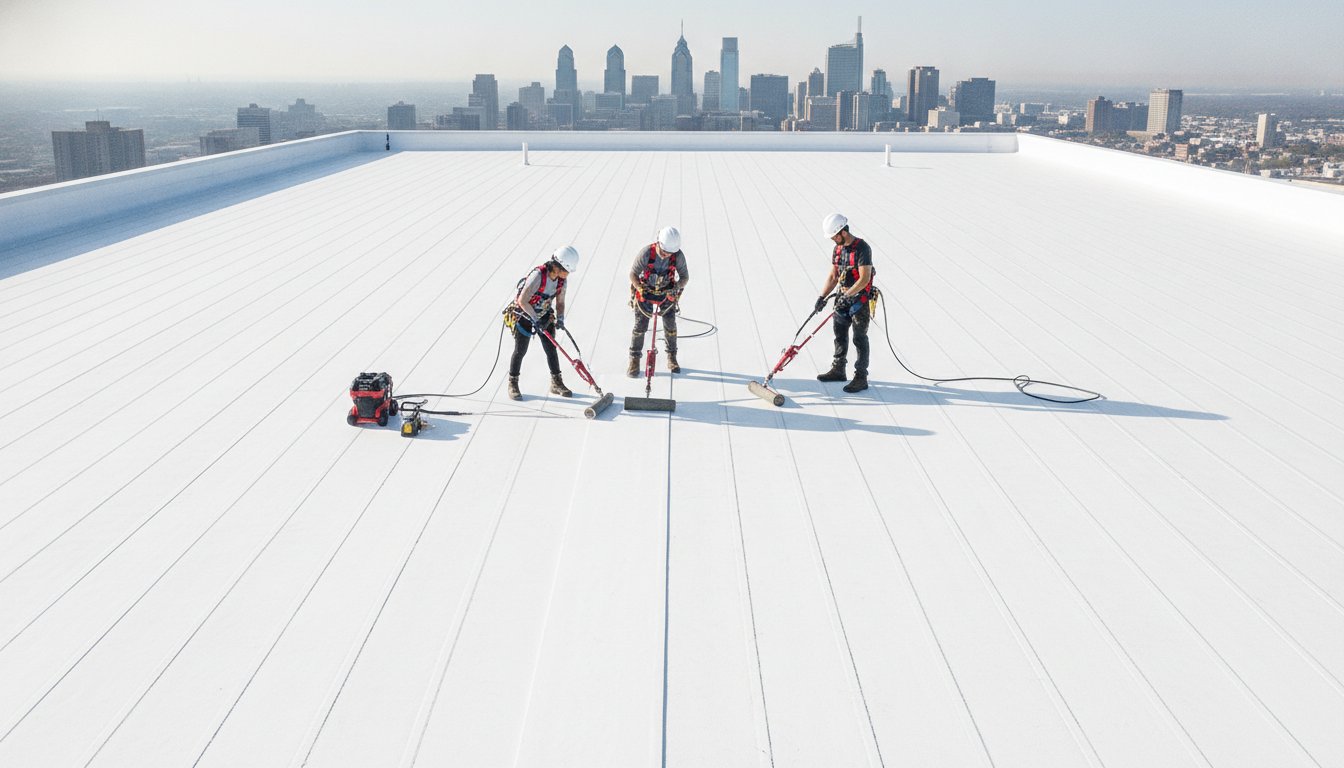
Maintenance is a tactical necessity, not an optional expense. For industrial facilities in Southeastern Pennsylvania, a bi-annual rhythm is the standard for asset protection. You must inspect the system in the spring to assess winter damage and again in the autumn to prepare for freezing conditions. A professional commercial roofing contractor Philadelphia focuses on the technical details that prevent catastrophic failure. This includes debris removal from drainage paths and the reinforcement of critical membrane seams. Ponding water is the primary cause of premature system degradation. If water remains on the surface for over 48 hours, it accelerates membrane breakdown and adds thousands of pounds of dead weight to your structural deck.
A qualified commercial roofing contractor Philadelphia uses these bi-annual visits to document every minor defect before it escalates. Proactive seam reinforcement and the application of sacrificial coatings are low-cost interventions that prevent high-cost disasters. Budgeting for these activities allows you to shift from reactive repairs to long-term life-cycle management. It's about protecting the building's core while ensuring operational continuity.
Winterizing Philadelphia Commercial Roofs
Winter in the Mid-Atlantic requires specific preparation. Heavy snow accumulation and ice damming create immense pressure on gutter systems and downspouts. We ensure all water diversion components are clear to prevent backup. Expansion joints must be checked for thermal movement readiness. In large-scale industrial buildings, materials contract significantly during sub-zero stretches in Allentown and Reading. If the joints are seized or compromised, the resulting tension will tear the membrane at the perimeter flashings.
Extending System Life through Roof Coatings
Roof restoration is a high-value alternative to a full tear-off. The science of silicone and acrylic coatings allows us to create a seamless, monolithic barrier over existing membranes. This process eliminates the logistical complexity and cost of a total replacement. Silicone coatings are particularly effective for flat roofs with intermittent ponding issues. They provide superior UV resistance and improve facility energy efficiency by reflecting up to 88% of solar radiation. A cost-benefit analysis often shows that restoration can extend a system's life by 10 to 20 years at a fraction of the capital expenditure required for a new installation. For decisive project management and industrial-grade exterior maintenance services, proactive planning is the only reliable strategy.
Strategic budgeting involves identifying the exact point where maintenance costs exceed the value of restoration. Waiting too long leads to saturated insulation, making a simple coating application impossible. We provide the technical data required to justify these capital investments to your board or ownership group. Establishing this maintenance rhythm today secures your facility against the unpredictable weather patterns of 2026 and beyond.
Selecting Prestige Operations for Industrial-Scale Roofing
Large-scale industrial facilities require more than a vendor. They require a strategic partner capable of managing high-stakes infrastructure. Prestige Operations serves as the decisive commercial roofing contractor Philadelphia for organizations that prioritize competence over colloquialisms. We don't aim to be your "friendly neighbor." We aim to be your most reliable logistical asset. Our teams provide "boots-on-the-ground" expertise across Philadelphia and Allentown, ensuring every project phase moves with methodical efficiency. We understand that a roofing project must not compromise your daily output.
Logistical mastery is our baseline. We coordinate specialized labor and heavy industrial equipment to ensure minimal disruption to your operations. Whether we're managing a complex tear-off or a precision restoration, our focus remains on execution. We operate in high-stakes environments where system failure is not an option. By selecting a commercial roofing contractor Philadelphia with deep regional roots, you secure a partner who understands the specific regulatory and climatic pressures of Southeastern Pennsylvania. We manage the complexity so you can focus on your core business.
Industrial-Strength Reliability in Execution
Precision management is the core of our service model. We handle large-scale roofing installations with an unfazed demeanor, regardless of project complexity. Our track record spans industrial hubs in Collegeville, Reading, and the Lehigh Valley. We specialize in environments where chemical exposure, heavy mechanical loads, and strict safety protocols are the norm. We don't just install membranes; we engineer defensive barriers. This results-driven approach ensures your roofing system remains a high-performing asset for decades. Our operational scale allows us to move quickly, transitioning between phases without the delays typical of smaller, less equipped firms.
Direct Engagement: Request a Tactical Quote
Efficiency starts with the estimating process. We provide a streamlined path for industrial roofing estimates in Philadelphia. Our quotes are technical documents, not sales pitches. You'll receive clear specifications regarding material performance, wind uplift ratings, and project timelines. We maintain absolute transparency in our technical methodology. This allows facility managers to make informed, data-driven decisions regarding capital expenditures. If your current system shows signs of R-value degradation or seam failure, immediate assessment is mandatory. Contact Prestige Operations for a professional roofing assessment to secure your facility's future. We provide the technical clarity and logistical strength required to manage your most critical physical assets.
Secure Your Industrial Infrastructure for 2026
Commercial roofing is a high-stakes operational requirement. You've seen that reactive repairs are a failed strategy in the Mid-Atlantic climate. Success in 2026 demands adherence to updated building codes and the use of forensic-level moisture detection to prevent structural decay. Whether you're managing a warehouse in Philadelphia or a manufacturing plant in Allentown, the goal is long-term asset protection through technical precision. Selecting a seasoned commercial roofing contractor Philadelphia ensures your facility remains watertight and energy-efficient. It's about maintaining a tactical defensive barrier for your physical assets.
Prestige Operations brings specialized industrial labor and logistical mastery to every project. We handle the complexity of large-scale roofing installations with an unfazed focus on results. Our comprehensive regional coverage from Philly to Allentown provides the boots-on-the-ground reliability you need to minimize downtime and secure your capital investment. We move with methodical efficiency to ensure your project stays on schedule and within technical specifications. Don't leave your facility's integrity to chance when technical expertise is available.
Secure your facility with a tactical roofing assessment from Prestige Operations. Take decisive action to protect your operations today.
Frequently Asked Questions
What is the average lifespan of a commercial roof in Philadelphia?
The average lifespan for industrial systems in the Mid-Atlantic is 20 to 25 years. However, Philadelphia's urban heat island effect and heavy snow loads can accelerate membrane degradation. Insurers often limit coverage for systems older than 15 years. Proactive replacement is a strategic move to maintain full asset protection and insurance compliance.
How do I know if my industrial roof needs a repair or a full replacement?
Replacement is necessary when forensic moisture detection reveals that 25% or more of the insulation is saturated. Repairs are a viable option for isolated membrane damage or flashing failures. If the structural deck shows rust or rot, a full tear-off is the only safe solution. Identifying these vulnerabilities early prevents catastrophic interior damage.
Does Philadelphia require specific permits for commercial roof coatings?
Philadelphia generally does not require a permit for applying a roof coating or performing minor repairs. Permits are strictly required for full replacements, structural modifications, or new penetrations. Always verify current 2026 municipal codes before starting a large-scale project. A qualified contractor handles these regulatory logistics to ensure your project remains compliant.
What are the benefits of TPO roofing for warehouses in Allentown?
TPO membranes provide superior heat reflection and energy efficiency for large-scale warehouses. In Allentown, where summer temperatures spike, these "cool roof" systems significantly reduce HVAC loads. TPO also offers high puncture resistance against industrial debris. It's a tactical choice for facilities that prioritize lower operating costs and long-term durability.
How often should a commercial roof be inspected in the Mid-Atlantic region?
Industrial roofs in the Mid-Atlantic region require bi-annual inspections to maintain structural integrity. A professional commercial roofing contractor Philadelphia schedules these in the spring and autumn to address thermal expansion and winter debris. This rhythm ensures the system remains within warranty specifications and identifies minor issues before they become liabilities.
Can you perform commercial roof repairs without disrupting my business operations?
Decisive logistical management allows for repairs with zero disruption to your daily operations. We utilize specialized equipment and off-peak scheduling to maintain a safe, productive environment. As a leading commercial roofing contractor Philadelphia, our "boots-on-the-ground" approach prioritizes your facility's output. We coordinate every phase to ensure your personnel and inventory remain protected throughout the process.
What causes most flat roof leaks in Philadelphia industrial buildings?
Most flat roof leaks in Philadelphia industrial buildings stem from ponding water and failed seams. Thermal expansion causes membranes to pull away from perimeter flashings during extreme temperature swings. Clogged drainage systems further exacerbate these issues by trapping water on the surface. Without regular maintenance, these minor failures lead to widespread insulation saturation and structural decay.
Are there energy tax credits available for cool roofing in Pennsylvania?
Federal incentives like Section 179D often provide tax deductions for energy-efficient roofing upgrades that meet specific performance criteria. Pennsylvania also offers programs for "cool roof" installations that reflect sunlight and reduce thermal load. You should consult with a technical specialist to evaluate the current 2026 eligibility for your specific facility. These credits can significantly offset the initial capital expenditure.